I started this blog at the urging of friends and family in April 2010 when my husband and I were given an opportunity to relocate in Maryland for one year. We have now returned home to Arizona and continue to walk by faith as we watch God orchestrate the adventures in our lives. I invite you to share in our adventures as we watch God at work!

We live by faith, not by sight. 2 Corinthians 5:7


Wednesday, November 12

wacky wednesday - who knew???

Most kids, regardless of gender, like playing with LEGOS. Some kids like to use the "recipe" and build the fire truck or the Star Wars Death Star. Others like to use their imagination and create something entirely on their own.

Most LEGO sets are geared to children. Some sets are movie themed (Star Wars and The Lego Movie come to mind); others are based on superheroes (Batman, Superman, etc.) or everyday heroes (fireman and policemen, among others). Recently "girl sets" with princess or animal themes (with lots of pink bricks) have become popular. But at some point in childhood, most kids lose their fascination with the little interlocking bricks.

Or so I thought.

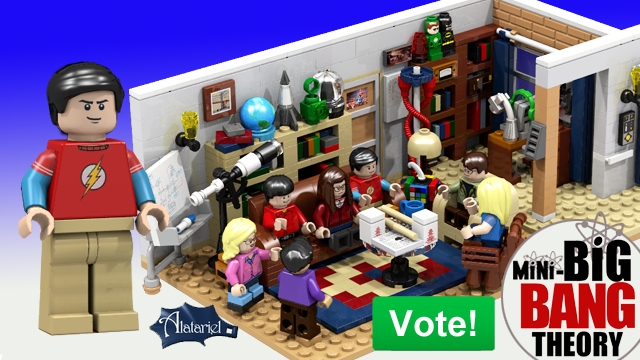
My sweet husband was googling the television show Big Bang Theory to purchase the last season on DVD and found this:

image
What could be better than LEGOS & Big Bang Theory together?
(This is the fan model created by Alatariel & GlenBricker, not the actual set. You can see the complete set, minifigures (characters) and accessories they submitted here.)

Further research revealed that ANYONE can submit ideas to LEGO Ideas by creating a model,  writing a project description, and following the guidelines and rules outlined by LEGO. The next step is gathering 10,000 supporters for your project. Once a project garners the required support, it enters the LEGO review phase where a review board of set designers and marketing representatives evaluate the project using criteria such as playability, safety and fit within the LEGO brand. All sets, fan ideas and internal ideas, go through this same process with the review board. If a fan's project is selected by the review board for production, the fan designer gets credit and a percentage of the sales. Awesome, huh?

In September, the LEGO review board announced  several fan projects that made the cut and Big Bang Theory was one of them! You can see the others on the LEGO Ideas Blog - my Dr. Who friends will want to check it out for sure! And one of the projects is unlike any other I've seen.

The name LEGO is an abbreviation of the two Danish words "leg godt" meaning "play well." With sets for kids of all ages, everyone will play well!

Wednesday, November 5

wacky wednesday - what time is it?

Last weekend most of the country turned their clocks back one hour. The phenomenon known as "Daylight Saving Time" (DST - and no, it is NOT Daylight Savings Time) is a mystery to me. Perhaps it is because Arizona, with the exception of the Navajo Indian Reservation in the northeast part of the state, does not participate in such foolishness. But the whole idea of messing with time made me wonder when we began to actually keep time in this country and why we mess with it now.

Prior to the early 1880's, time of day in the United States was determined locally and varied from town to town. This would help explain the large discrepancies in arrival times for the stagecoach.  It was generally determined by some solar method (a sundial, for example) and the town maintained a clock, usually in the clock tower or church steeple, with the "real time" for all the other clocks to be set by.

In 1883, standard time in time zones across the country were instituted by the U.S. and Canadian railroads. Although that made perfect sense so the railroads could maintain accurate schedules, the new system was not embraced by everyone - I guess change is always hard. The railroads, in particular, needed accurate schedules with standardized time to coordinate the trains so they didn't run into each other, especially on single tracks with only an occasional "passing lane." As the practical benefits became obvious, standard time became more popular and was finally established in U.S. law on March 19, 1918 with the Standard Time Act of 1918, also known as the Calder Act. The Calder Act also established DST which was about as popular as standard time in time zones was in the 1880's.

We like to think DST is a modern concept but there is evidence the ancient Romans used it and even our own Benjamin Franklin wrote a paper on the benefits (reducing candle use and allowing farmers to utilize child labor (their own children) without sacrificing education) of changing the clock to enhance daylight hours. Germany was the first country to implement DST in 1916 with most of Europe following shortly thereafter. The benefit at that time was to reduce the use of artificial lighting to save fuel for the war (WWI) effort.

Daylight saving time was repealed in the U.S. in 1919 but standard time in time zones remained the law of the land. The Interstate Commerce Commission was given authority over time zone boundaries but whether or not a region observed DST was determined locally.

Daylight saving time was re-established nationally (and internationally) during WWII (for the same reason as during WWI) but after the war its use varied among states and localities. This caused mass confusion in transportation schedules. The Uniform Time Act (1966) provided standardization for the dates DST was observed but still allowed states or localities to follow DST or not.

The current national system of DST was implemented by a federal law called the Emergency Daylight Saving Time Energy Conservation Act of 1973 in response to the oil shortage of that time and was made permanent a year later. Arizona sent petitions and politicians to Washington D.C.  to fight for exemption from DST because it is cooler in the morning hours for farmers, construction workers, etc. to work. DST would force outdoor workers to begin their workday at earlier hours to take advantage of the cooler temperatures. Adding daylight hours in the evening just makes it light later while it is still hot outside and impacts when people can enjoy outdoor activities. For example, people would have to wait until 9:00 to go to a drive-in movie or play baseball on a field with lights rather than under the blazing sun. The Nixon Administration granted that Arizona (and Hawaii and several territories) be exempted from the law and it has remained that way since then.

So why does the Navajo Indian Reservation in northeastern Arizona participate in DST? The reservation spans four states - Arizona, Utah, New Mexico and Colorado - and three of them observe DST so it makes sense that the part in Arizona would also observe DST.

If having just one seventh of the state use DST isn't wacky enough, then how about the fact that inside the boundaries of the Navajo Indian Reservation resides the Hopi Indian Reservation which does not observe DST! Only in Arizona!
Wednesday, October 29

wacky wednesday - have a cup of joe

Coffee. You either love it or hate it.

My love affair with the bean began when I was in high school and had to be at marching band practice at 6:30 AM every morning. It started innocently enough with about half a cup of coffee before I left for school. In just a couple of months, it was a whole cup of coffee sipped while I got ready. And then before I knew it, it was a second cup in the car on my way to school.

While I was in college I would often drink a cup of coffee in the evening so I could stay awake and study. And then when I got my first job and was working third shift, I would drink a whole pot of coffee over the course of my shift.

In the decades since then, I have gone cold turkey and had no coffee (when I was pregnant or breastfeeding), back to a couple of cups a day and then on to an entire pot of coffee. Back and forth it would go. For the past five or six years I have settled into a two cup a day habit. (And for clarification, a cup means my coffee mug which probably holds closer to 12 ounces than a true cup.)

I admit I like the caffeine buzz; it jumpstarts my day. But I also genuinely love the taste of coffee. I usually drink it black and hot but I also like it iced or with cream or sweetener, depending on my mood. And my favorite way to enjoy it is on my patio while I read the newspaper (yes, a paper one not a digital one!).

Imagine my delight when I read in the Wall Street Journal this week that coffee might actually be good for you! After some additional research, I discovered that more and more research shows that coffee drinkers are less likely to have type-2 diabetes, Parkinson's disease and dementia (including Alzheimer's disease) and have fewer cases of certain cancers, heart rhythm problems and strokes compared to nondrinkers.

No one can say that drinking coffee prevents these conditions since researchers don't ask people to drink or not drink coffee for their studies. They simply ask about their coffee habits and, therefore, can't show cause and effect.

What is proven is that coffee has a very strong antioxidant capacity and contains magnesium and chromium - minerals that help the body use the hormone insulin which controls blood sugar. While more research is needed, researchers are very optimistic that drinking two to four eight-ounce cups of coffee per day has some great health benefits (note: pregnant and breastfeeding women should limit their caffeine intake to 200mg/day - about 12-ounces of coffee).

I wonder if coffee-haters will decide to learn to like coffee like vegetable-haters learn to like a few leafy greens?

Yeah, probably not.

coffee

Wednesday, October 22

wacky wednesday - step it up

About a year ago my husband and I got FitBits and it's been a love/hate relationship with them ever since. FitBits are similar to a pedometer but also so much more. Besides tracking your steps and converting that into miles, it also distinguishes between very active steps and moderate or slow steps. Some track your sleep quality based on how much you move around, track calories burned or even steps climbed.

The model we got (Zip) can connect to our smartphone or computer via Bluetooth so we, and everyone else in our group, can instantly know not just our current day's steps, but also our weekly totals, most and least active day and more. While being part of a group isn't required it can help you stay motivated. You can challenge people in your group - most steps in a day wins, for example - to make it more competitive.

I admit it is motivating to see I only need 400 more steps to NOT be in last place. And I love it when I meet my goal number of steps for the day or the week.

But there are also times when I am sooooo far behind there is no way to catch up for the day. Then I am more likely to be motivated to sit on the couch and watch tv. And I hate it when we are out shopping and my son-in-law, Jacob, logs 2000 more steps than me even though we've gone to the same place. Of course, when I stop to look at something, he "wanders around" so I guess we haven't really "gone to the same place."

It was with great amusement that I read a ZITS comic strip (by Jerry Scott and Jim Borgman) last week. It reminded me that some people work at getting their steps in (me) and others just do it naturally (Jacob).

1097271

Wednesday, October 15

wacky wednesday - full circle?

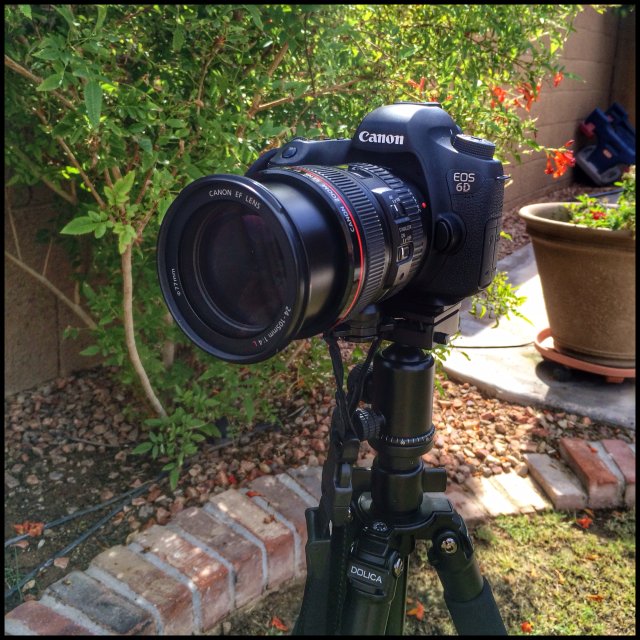
I was reading an article the other day that said that dSLR camera sales have dropped sharply in the past two to three years and that in the near future (less than ten years) they predict that only professional photographers will be purchasing dSLR cameras.

dSLR
I am not a professional by any stretch of the imagination but I do like my dSLR and prefer it over every other camera I own.

And what, you ask, is replacing dSLR cameras in the hands of the masses?

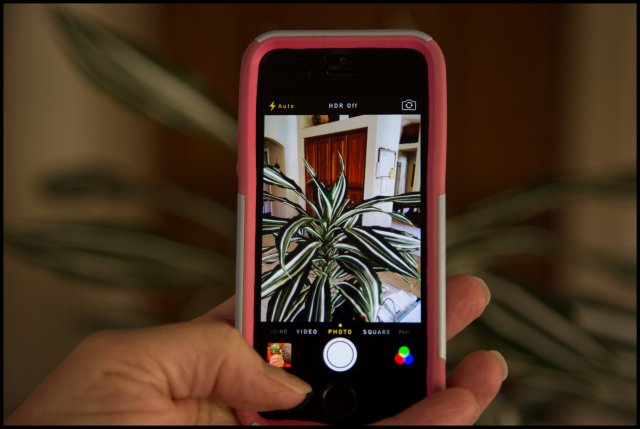
iPhone
Yep, it's a smartphone!

In 1837, Louis Daguerre created the first practical photographic process (which he named daguerrotype) using copper sheets. The camera he used was actually conceptualized by Johann Zahn 150 years before but wasn't brought to fruition until Daguerre invented the process for making the image. For the first time, actual images could be stored on a material and preserved for decades. Photography was born! And with it, professional photographers who were the only ones who had access to such pricey cameras.

Over the next hundred years or so, the world of photography saw many advances. George Eastman invented photographic film and with his first camera ("Kodak"), a simple box camera, photographs were more widely available. The 1950's brought the "Instant" cameras. Remember the Polaroid Land Camera? Gone were the days of waiting a few weeks for your film to be processed. In just a few minutes your photo magically appeared. Unfortunately, they also drastically faded over time. By the  1990's, digital cameras were on the scene with dSLR's right behind them. What would be next?

Since the first camera phone came out in 2000, their popularity has grown every year. By 2006, half of the world's mobile phones had cameras. Every few months newer technology gives us higher resolution and sharper images faster. App developers work overtime to provide us with photo editing and enhancing options making our photos look like works of art. 

There are several reasons folks are trading their dSLR cameras for camera phones. First, images can instantly be shared on social media sites. Camera phones are compact and fit in your pocket weighing next to nothing. You can take them everywhere. Lugging a bulky camera bag - or even just an average size dSLR camera - can be heavy and cumbersome. People don't go anywhere without their camera phone so they have them for those unexpected, candid photo ops.

By the end of the article, I had concluded we have come full circle in photography. Photography began with professional photographers having "real" cameras and will apparently soon return to professional photographers being the ones with "real" cameras.

And a new genre is born... phonography.

Wednesday, October 8

wacky wednesday - you know it's officially autumn in arizona when...

In some parts of the country October means it's time for sweaters and  hot cocoa and a fire in the fireplace. Leaves change colors and the air is crisp and cool. In other words, autumn has arrived in full force.

Not so here in the Valley of the Sun. We use an entirely different measuring stick to gauge when autumn actually arrives - and it's not the official date on the calendar. It pretty much has nothing to do with the thermometer since we are typically still swimming in quite comfortable, unheated swimming pools until the very end of September.

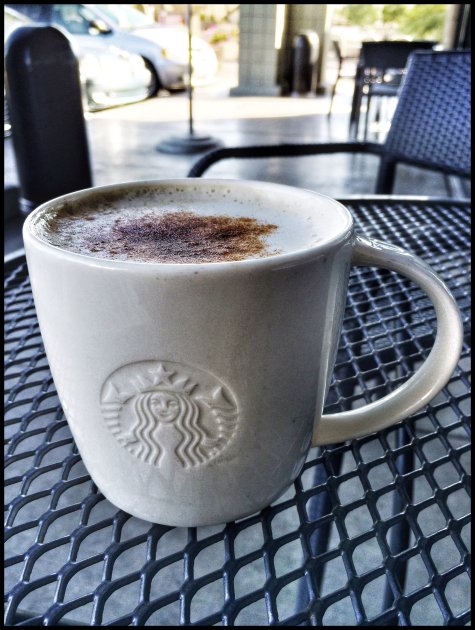
1.  The arrival of Starbuck's "Fall Drinks" - Pumpkin Spice Latte and Salted Caramel Mocha. These perennial favorites are available around October 1st and are a consistent prophesier of the arrival of fall in places where the thermometer is no help. They are around for a limited time, like fall, and lead into the Holiday Drinks of winter.

PSL
I always get a Pumpkin Spice Latte (full fat and with all the bells and whistles!) in a real cup at the beginning of the season!

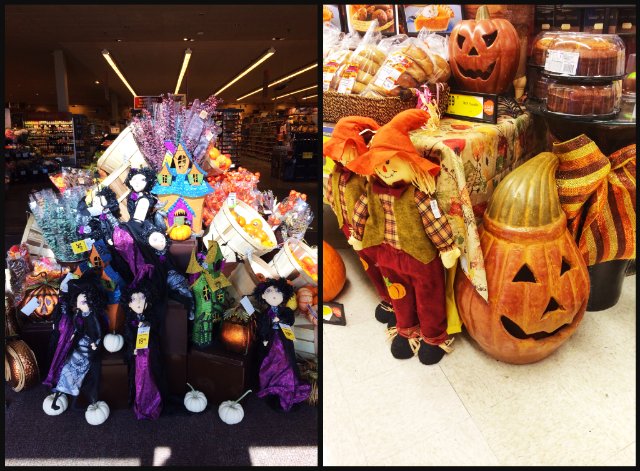
2.  Large, prominent Halloween displays as soon as you walk in the door of any grocery store. It seems the marketing people have determined that placing such displays within four feet of the door ensures you will trip over it and something will fall in your grocery cart. In any case, they show up the week that has October 1st in it making it a dependable autumn indicator.

Halloween collage
These displays tend to be a little scary with witches and jack o'lanterns as tall as scarecrows!

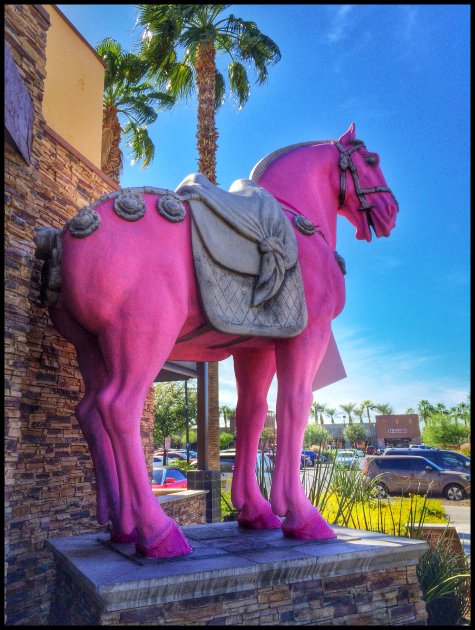
3.  The arrival of pink everything to promote Breast Cancer Awareness month. Just about everything from yogurt lids to shoe laces turns pink in October. It is a vivid forecaster of the advent of autumn because it contrasts so dramatically with the normal "earthy" autumn colors.

pink horse
My personal favorite uprising of pink is the painting of the P.F. Chang's horses which occurs on October 1st. They stay pink through October 31st.

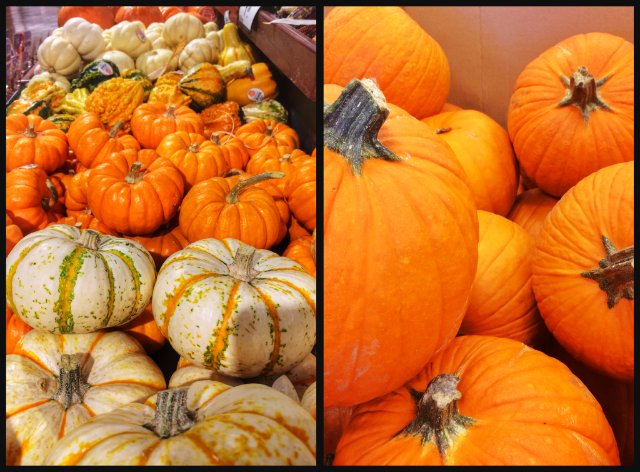
4.  Multi-colored gourds and pumpkins magically appear in food stores.  The colored gourds are fun to decorate with but the larger, jack o'lantern-type pumpkins don't last long in the heat once they are cut. Nevertheless, these colorful fruits are accurate autumn prognosticators.

pumpkin collage
Everything about pumpkins - their color, their smell, their taste - screams "AUTUMN!"

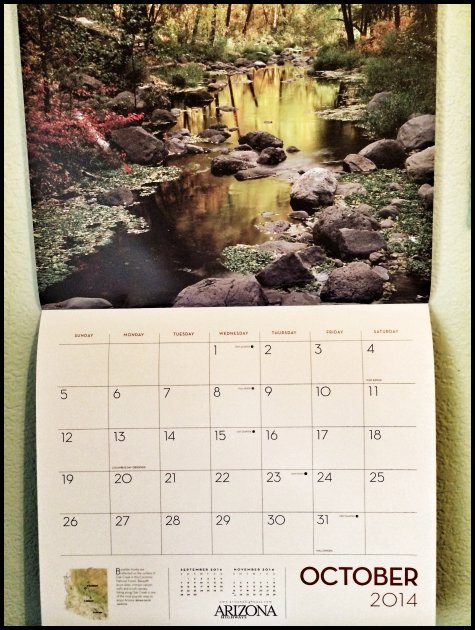
5.  And lastly, turning over the calendar page! The October calendar picture ALWAYS depicts some aspect of autumn and lets us know we have officially left summer behind. It is the ultimate, most accurate indicator that autumn is really here.

calendar
For some reason, this one always catches me by surprise.

Wednesday, October 1

wacky wednesday - where's the magic?

I think I have mentioned once or twice that we LOVE Disney. Because it's fairly close, we go to Disneyland in California most of the time but once in awhile we shake it up a bit and head to Orlando to check out Walt Disney World. We just returned home after spending a week there with our sweethearts (aka grandkids) and their parents.


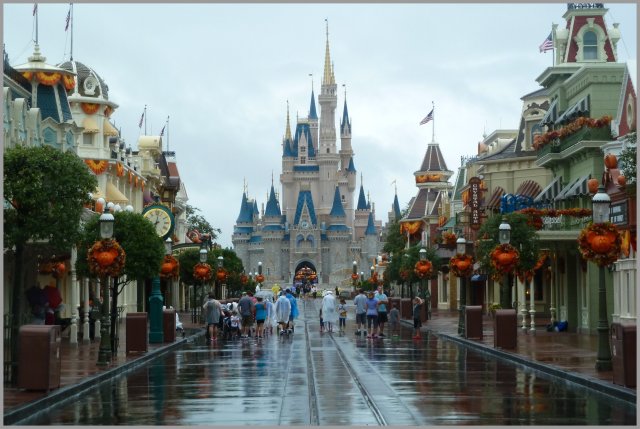
Cinderella's Castle
I love walking down Main Street at the Magic Kingdom early in the morning before it gets crowded!

While I had a good time overall, I was disappointed in the behavior of some a lot of the adult guests who seemed to be very self-involved and disengaged from the experience. They didn't appear to be having a very good time and, at times, were preventing other guests from enjoying their time there. I know it isn't "the happiest place on earth" - that's reserved for Disneyland - but  it shouldn't look like "the grumpiest, most selfish place on earth" either.

As I was reflecting on our time there, I came up with a list on how to be a considerate guest (aka customer) whether you are at a Disney park or pretty much anywhere in public.
  1. Use common courtesy. Saying please, thank you, excuse me and I'm sorry doesn't stop when adulthood begins. Bumping into someone in a crowded place is inevitable but glaring at them like it's their fault they are where you want to go is rude.
  2. Put your phone away while you are walking. Texting and walking in a crowded place is a recipe for an accident - like small children being knocked over or running into people. Texting and driving a scooter is akin to texting and driving a car - don't do it! In fact, just put your phone away period and enjoy the experience. Email can wait.
  3. Observe personal space. Pushing up against people in lines or crowded situations (like a parade or fireworks, for example) frightens children who are sandwiched in between adults. They can easily get trampled when adults behind them don't see them.
  4. Obey the posted rules and verbal instructions. If a sign says "NO Flash Photography" then turn your flash off unless it says "Except for (insert your name) ."
  5. Be considerate of people behind you during parades, fireworks, etc. (in a movie theater, at a sporting event...). Holding your phone or iPad above your head to shoot video of the entire show limits the visibility of the people behind you. Multiply this practice by hundreds of people and no one past the second or third row of guests can see anything. Putting your child on your shoulders effectively does the same thing. If they aren't tall enough to see above the crowd, hold them with their head at the same height as yours.
It seems that the "magic" of Disney is slipping away as the entitlement generation "grows up." Or maybe society as a whole has become more self-centered. Whatever the reason, I find it sad and discouraging that adults are modeling such self-indulgent, inconsiderate behavior to this generation of children. I guarantee no good will come from that.