I started this blog at the urging of friends and family in April 2010 when my husband and I were given an opportunity to relocate in Maryland for one year. We have now returned home to Arizona and continue to walk by faith as we watch God orchestrate the adventures in our lives. I invite you to share in our adventures as we watch God at work!

We live by faith, not by sight. 2 Corinthians 5:7


Sunday, June 10

Arizona Eats & Treats #3... El Guero Canelo

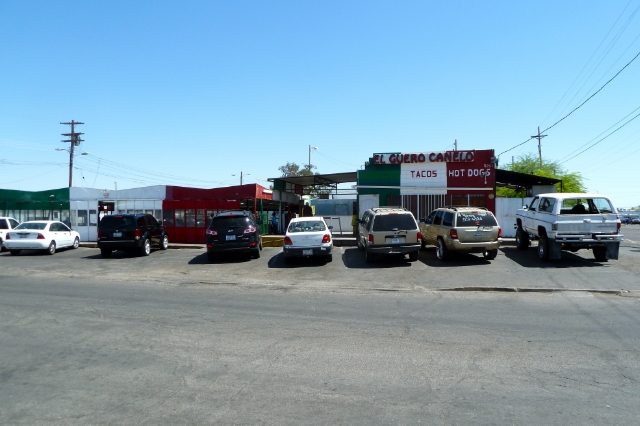
Nothing says summertime like a hotdog. You can have it Chicago-style or Kansas City-style or Newark-style or Carolina-style. And in Tucson, Arizona you can have it Sonoran-style. We recently went to El Guero Canelo for the original Sonoran-style hotdog.

el guero canela
There are three El Guero Canelo locations in Tucson- this one is the original, also known as EGC#1.
5201 S. 12th Avenue  Tucson, Arizona

Daniel Contreras was born in Sonora, Mexico and immigrated to the United States in 1979 at the age of 18 searching for the American dream. Finally, in 1993 he began selling carne asada and Sonoran-style hotdogs from a carreta (cart) on 12th Avenue and Utah Street. His Sonoran-style hotdogs were so popular he opened his first restaurant in 1997. And the rest, as they say, is history!

So what, you ask, is a Sonoran-stye hotdog? Start with a fresh, homemade potato bun (specially made like a canoe to hold the toppings!). Add an all-beef hotdog wrapped in bacon. Then top it with pinto beans, grilled onion, fresh onion, chopped tomato, mustard, jalapeno sauce and mayo. That's right, I said mayo!

Sonoran hotdog
The Sonoran Dog comes with a mild chili pepper on the side and at only $2.49 each is a steal!

There is a huge salsa and condiment bar if there aren't enough goodies on it for your taste. We tried a couple of the salsas with our chips- muy bueno!! If someone had suggested a month ago that I would eat a bacon-wrapped hotdog with mayo on it, I would have laughed at them. Now, however, I would simply smile and say, "Only at El Guero Canelo!" It was a fiesta in my mouth- the only thing missing was the pinata!

Others have tried to copy the Sonoran-style hotdog- but it all started here. And it's absolutely worth the drive to Tucson!

Wednesday, June 6

15/100... saguaro national park


A couple of weeks ago we put the top down on the Miata and headed south to Saguaro National Park (#15 on my "100 Things to Do in Arizona" list) near Tucson. One of three national parks in Arizona,  Saguaro National Park has 143 square miles of Sonoran desert covered with thousands of Giant Saguaros, the largest cacti in North America.

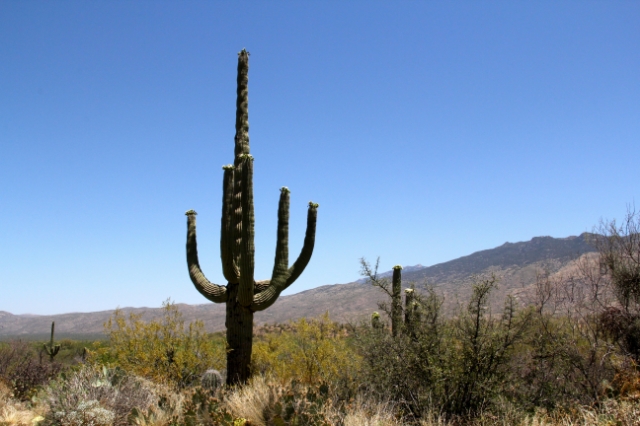
lone saguaro
These majestic giants often reach heights of over 30 feet and when fully hydrated can weigh as much as 4800 pounds!

Saguaro National Park is divided into an Eastern District and a Western District with much of the city of Tucson in the middle. Although both districts have a lot of saguaros, they are noticeably different in terrain. We spent the morning in the Eastern District and then went to the Western District after lunch. Peak saguaro blossom time is mid-May to early-June so we were in for a real treat!

Flower Collage 1
The tops of the saguaros looked like a bouquet of white flowers (close-up of one in lower right corner). We also saw blooming cholla (red and pink flowers) as well as some blooming prickly pear (yellow and orange flowers).

The night-blooming saguaro blossom, Arizona's state flower, attracts many birds as well as bats who like its nectar. Several times we parked the car on the side of the dirt road... and waited... and listened... and we were not disappointed!

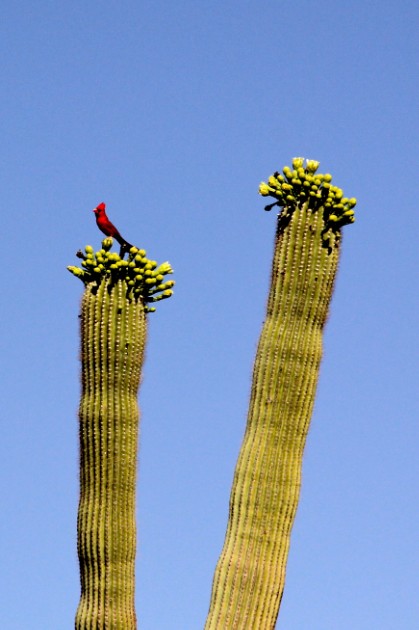
cardinal
A cardinal sang his sweet song from his perch high on a saguaro.

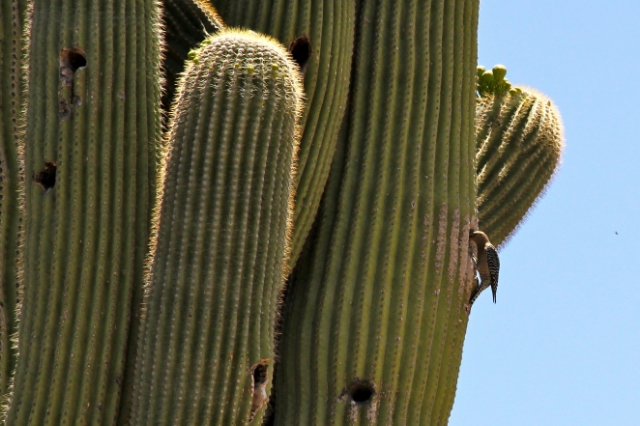
cactus wren
The cactus wren, Arizona's state bird, not only drinks the sweet nectar from the blossoms but also makes his home inside the cactus! A mature saguaro can be a condominium to many birds (note the holes!).

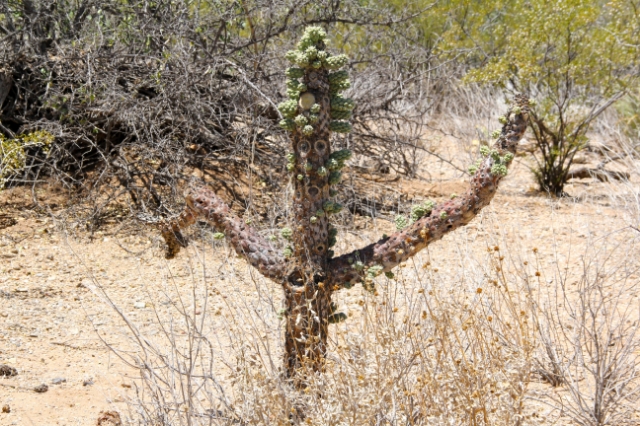
Although the park is home to, and protects, thousands of Giant Saguaros, there are many other varieties of cactus and desert plants there. Some were blooming; others were not- but all were beautiful!

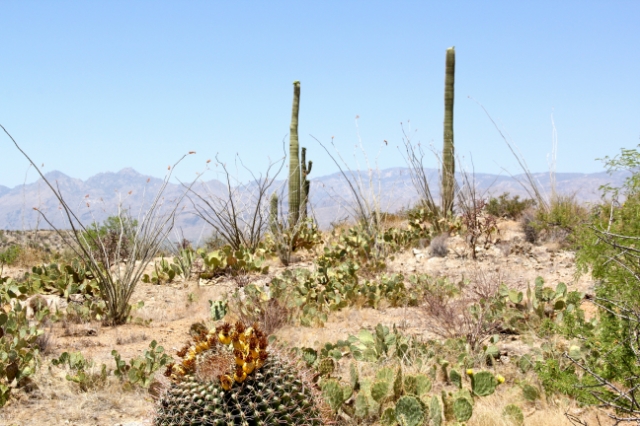
desert floor
The barrel cactus (foreground) had fruit, the prickly pear had blossoms and the ocotillo blossoms were dried up and beginning to fall.

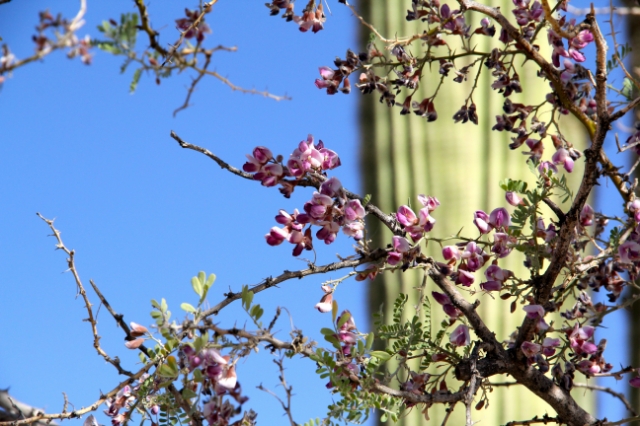
flowering ironwood tree
The flowering ironwood trees (with their black barks!) were gorgeous!

Most people equate desert with cactus but a lot of wildlife also lives there.  Although much of our time at Saguaro National Park was during the heat of the day (and it was 97 degrees in the afternoon!), we did spot several animals.

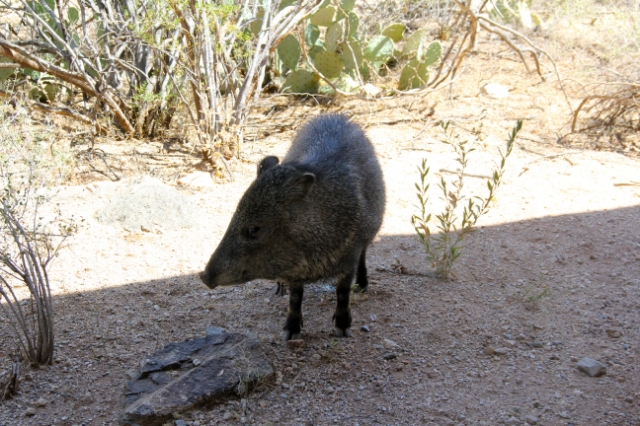
javelina
A family of javelina were spotted outside the visitor center in the Eastern District. A mom, dad and two little piglets were taking advantage of the shade made by the building. The park ranger assured me they are quite wild.

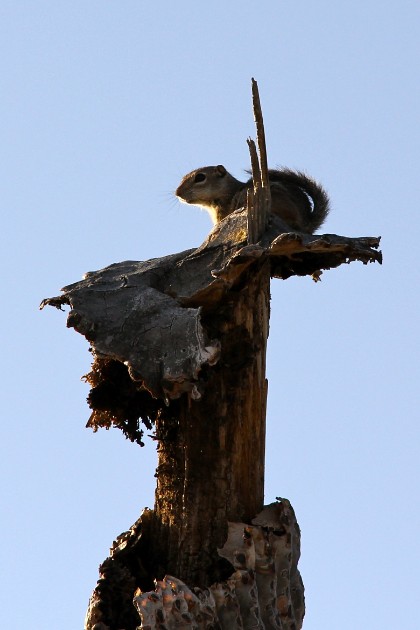
ground squirrel
We spied this cute guy (ground squirrel) high atop a dead, decaying saguaro. He easily scampered up and down his perch.

bunny
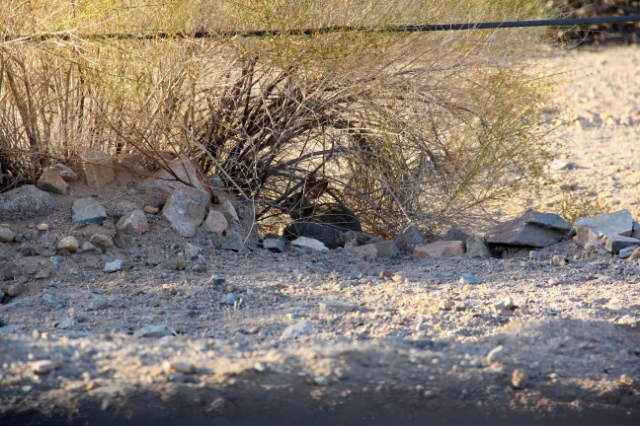
What a cute jackrabbit! He stayed very still as he tried to hide in the underbrush- we almost missed him!

deer
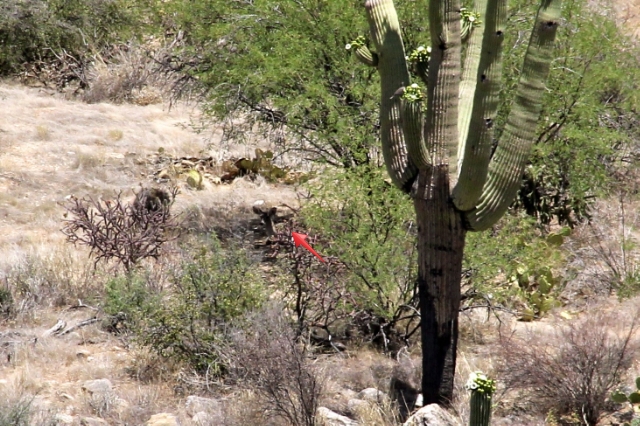
We watched this deer (by red arrow) scamper off and hide in the shade making him all but invisible!

Mr & Mrs Quail
We saw several families of quail. I love watching them scurry along the ground keeping their babies close by. This pair's babies are behind the cactus out of view.

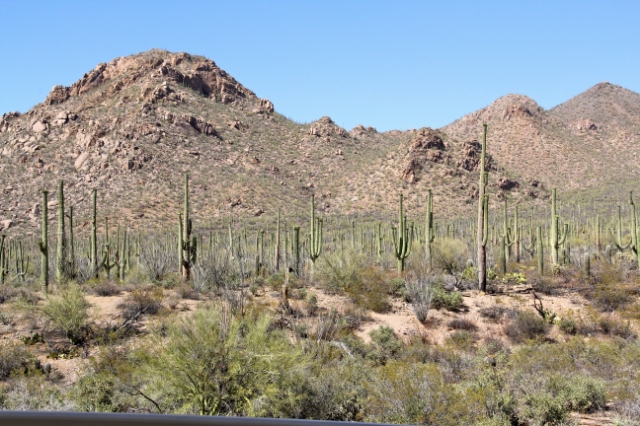
The Western District was a bit more mountainous and "forests" of saguaros were more evident than in the Eastern District. Around every turn in the road were hundreds or thousands more towering saguaros.

saguaro forest
Saguaros for as far as we could see!

Saguaros are slow growing with their rate of growth depending on the moisture they receive. Their shallow but expansive root system and one long tap root soaks up water. During the rainy season they visibly plump out as they store the water internally using it sparingly over the dry months.

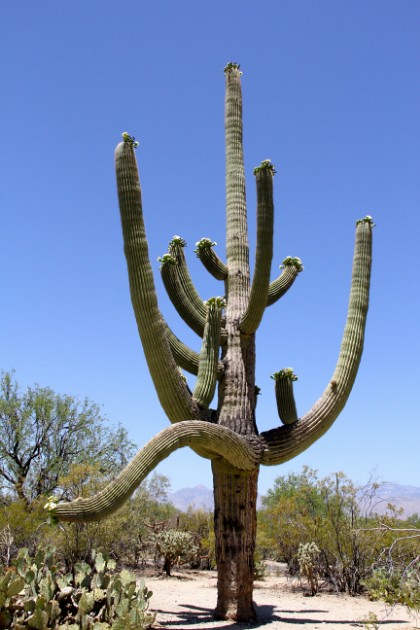
Some mature saguaros have no arms and others have many arms. An average old saguaro would have five arms and be about 30 feet tall. The largest ones, with more than five arms, are estimated to be more than 200 years old.

saguaro with many arms
This old man stands proud and tall!

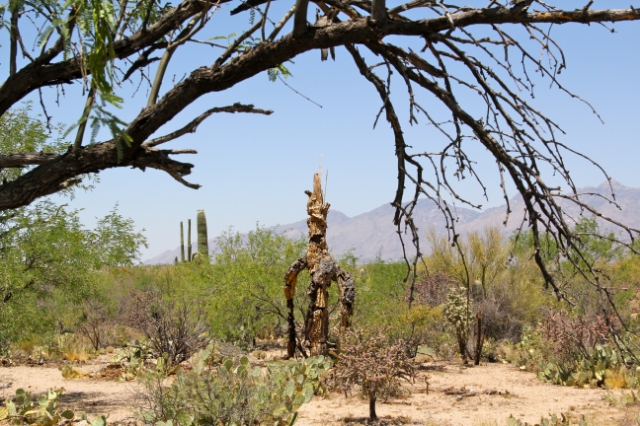
Eventually the saguaros die. Arm by arm they wither and dry up until finally only the woody spine is left. Sometimes the spines are used for fencing material before it, too, decomposes.

"man" saguaro
This 100% natural, withering saguaro looks like a person!

creature from the black lagoon
This one, in a more advanced stage of decay, looks like the "Creature from the Black Lagoon!"

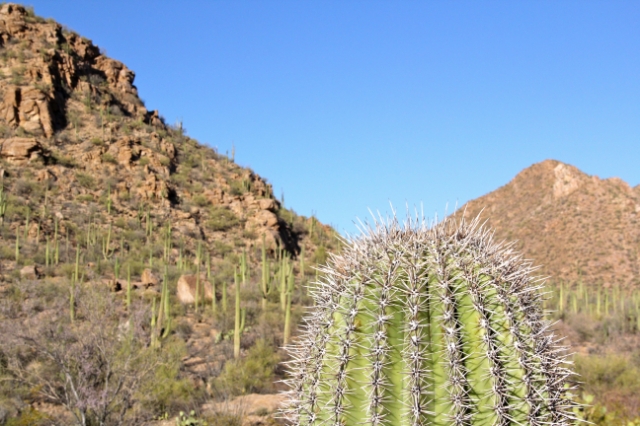
The skin of the saguaro is smooth and waxy and looks somewhat pleated. During the rainy season, the "pleats" expand with water giving it a less angular appearance. Although the skin is smooth, it is covered with spines that protect it.

saguaro forest 3
The spines are prickly!

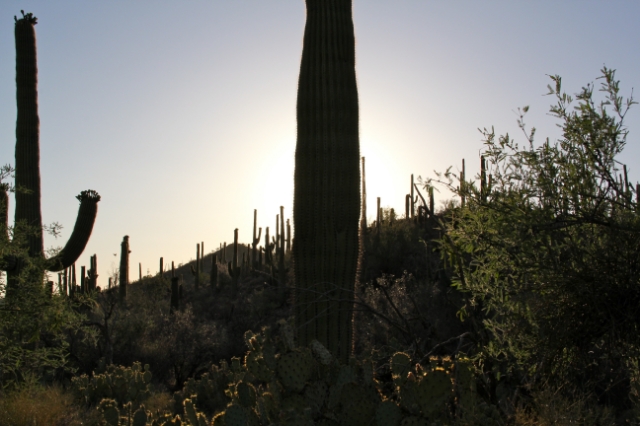
At last, the sun started its descent. 

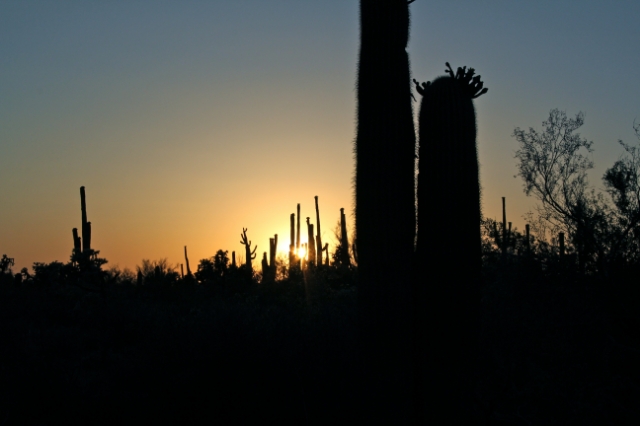
dark sagauros
The royal giants stood out in silhouette against the sun.

mountains at sunset
The mountains and desert floor burst forth in brilliant color as the sun dipped lower and lower in the sky.

sunset 1
And then the sun was almost gone.

We had a delightful day exploring nature and marveling at God's creation. I think I saw more saguaros that day than I had in my entire life before that. Saguaro National Park is not just an Arizona treasure; it is a national treasure!

Thumb Up or Down: UP!!!!!! I can't believe I waited so long to go!
Miles Round Trip: 300.7 miles
Miles To Date: 5268.2 miles
Percent of List Completed: 56%
Date of This Trip: May 19, 2012

Thursday, May 31

27/100... tempe town lake pedestrian bridge


One of the quirky things about the desert is that our rivers often have no water in them... until it rains. And in the desert that happens infrequently. Sometimes, though, we turn a river into a lake for recreation, community improvement and even flood control.

The Salt River used to flow through the Valley of the Sun providing water to city inhabitants. In the early 1900's a series of dams were built on the river to provide power and water for farming. Eventually the river ceased to flow in the city and the Phoenix area was left with a dry river bed. Then, in the 1990's Tempe city planners had a plan to bring back the water. Tempe Town Lake was completed and "opened" in 1999 and its pedestrian bridge (#27 on my "100 Things in Arizona" list) in 2011.

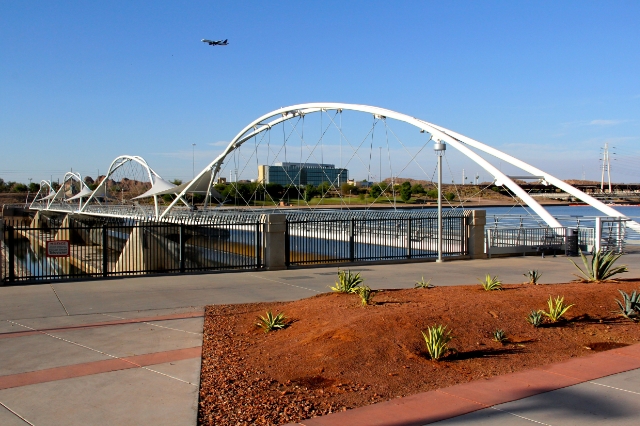
Tempe Town Lake Bridge
The Tempe Town Lake Walking Bridge is at the west end of the lake.

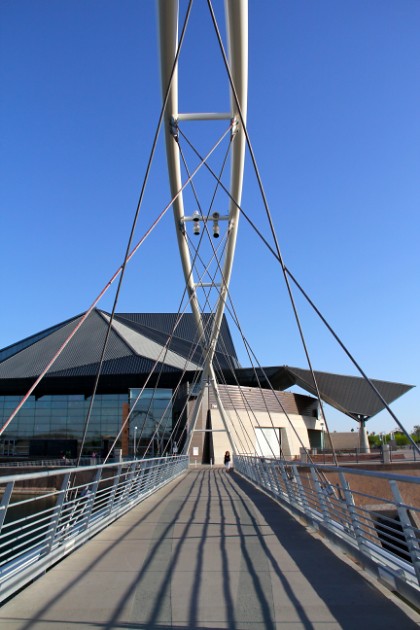
vertical bridge
There is no doubt that this bridge is eye-candy for those who enjoy art or architecture!

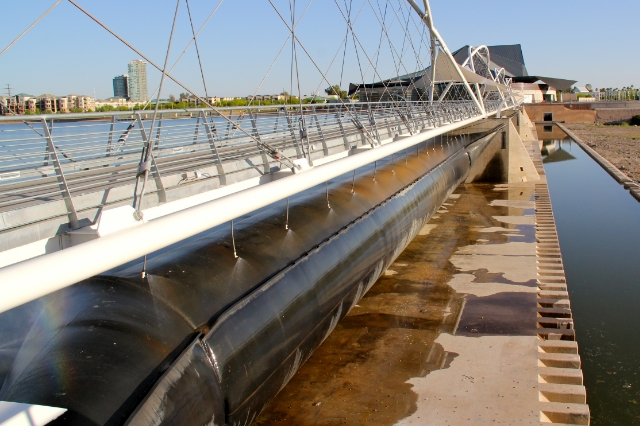
The lake utilizes rubber, air inflated dams bolted to a concrete slab to contain the lake at each end. The dam is divided into sections called a bladder. Each one is 225 feet long, weighs 10 tons and is an inch thick! The dam can resist flood water and debris at flow rates higher than ever recorded for the Salt River.

Never heard of an inflatable dam? There are over 2,200 inflatable dams in eleven countries around the world. The dams are simple to install, have low maintenance requirements and a long life expectancy.

TTL dam
Sprinklers mist the dam bladders to cool them off and to keep them from drying out and cracking.

The dam at the east end stands five feet high on a concrete base while the dam on the west end (the downstream end) is 16 feet high on a concrete base. It is the highest inflatable dam in North America.

view from TTL bridge
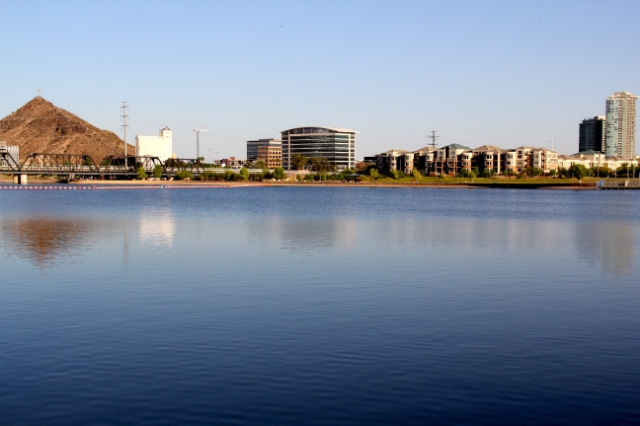
The view from the bridge is spectacular making it a popular path for joggers, walkers and bikers.

group shot TTL bridge
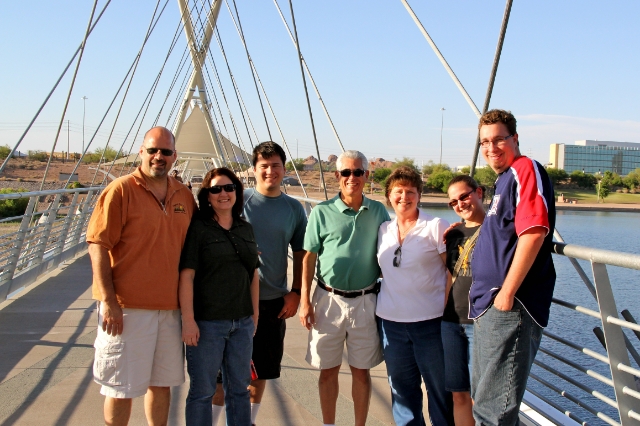
Our group (Mike, Laurie, Matt, Richard, Kristin, Janne and Adam) enjoyed the trek across the bridge!

Thumb Up or Down: Up!
Miles Round Trip: 32.7 miles
Miles To Date: 4967.5 miles
Percent of List Completed: 55%
Date of This Trip: May 12, 2012

Monday, May 28

55,68,45/100... randomness

Often times we venture far and wide to see something new (the lush islands of Hawaii, for example) or do something we've never done before (walking on a glacier comes to mind). One Saturday a few weeks ago we set out with M and L of MR KLUD to be tourists right here in the Valley of the Sun as we checked a few more things off my "100 Things to See in Arizona" list.

After a long drive across town to Phoenix International Raceway (#55), I was ready to get a taste of the car racing world. I never understood what compels people to watch cars go round and round and round a track. I had no appreciation for the beauty of a race car or for the melody of a tightly-wound engine. So why, you ask, would I put PIR on my list? The simple answer was to see what all the fuss is about.

Phoenix International Raceway
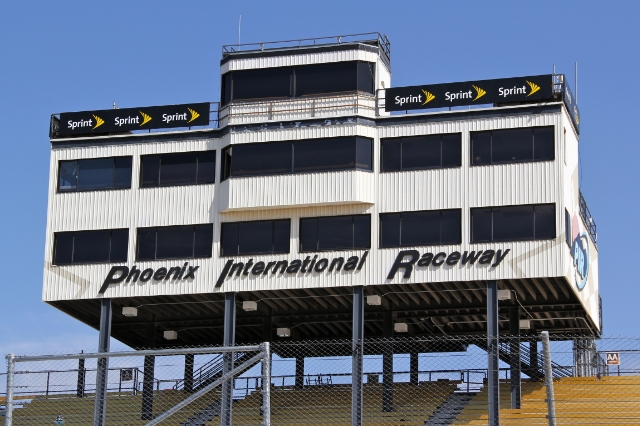
Located in Avondale, Phoenix International Raceway is home to two NASCAR races every year.

It was a nice day to be outside- not too warm and not too chilly. As soon as we got out of the car, I could smell the unique "racing aroma"... a mixture of asphalt, fuel, and steam. There was a tension in the air as if the entire raceway was screaming, "I feel the need for SPEED!!"

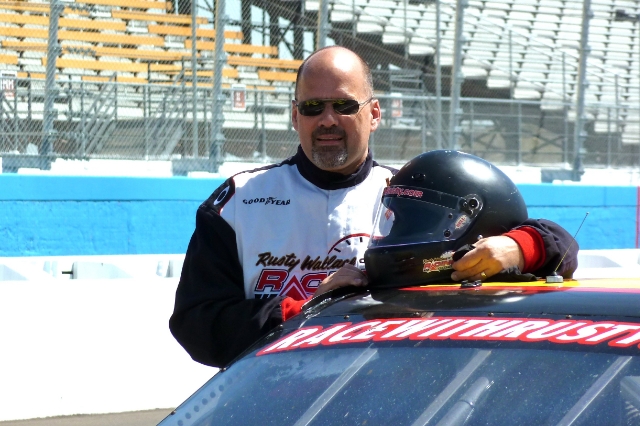
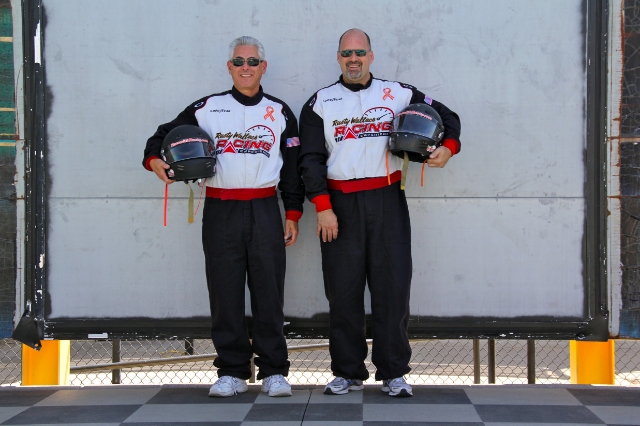
Last fall LivingSocial (the "deal" people!) ran a deal for four laps in a race car with a professional race car driver at PIR. Laurie and I each bought one for Mike and Richard for Christmas. And now was the time to redeem their deals.

getting ready
Richard climbed in his race car...

mike getting ready
... and Mike got ready to climb in his.

The track at PIR has been rebuilt, modified and enhanced several times in its 48 year history and is currently 1.51 miles long. The inside lane is where cars come up to speed to merge onto the track with other racers or to slow down before pulling into the pit. The outer track is where the racing is done.

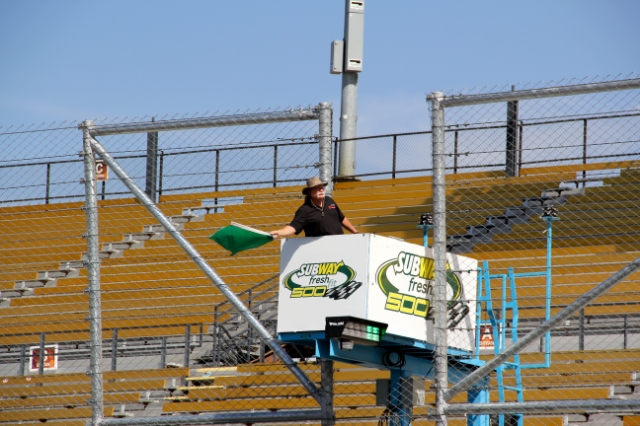
green flag

The track flagmen communicate with the drivers via colored flags. This solid green flag means "GO!!"

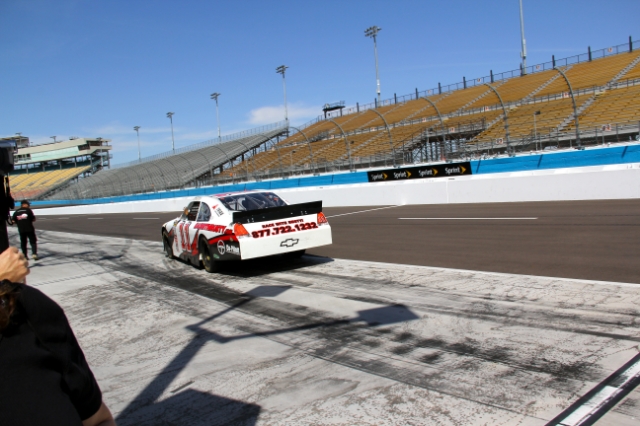
they're off
Richard's car took off and began accelerating!

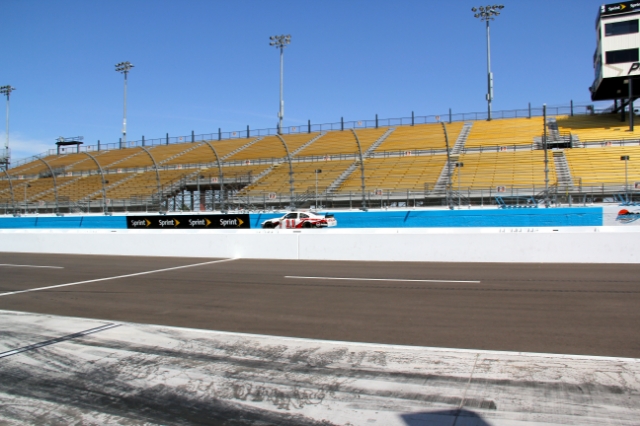
faster
And in what seemed like no time at all, it was whizzing by in the outer lanes!

Much too quickly, the race was over. Their drivers told them they drove at speeds of 130-160 mph!

winners
They are both anxious to go again... and next time THEY want to drive!

Being at the track, watching a really cool-looking car with someone I knew in it, willing that car to go faster, getting caught up in the excitement gave me a taste of what it's like on a real race day. In fact, coming back to watch a NASCAR race is already on my next list!

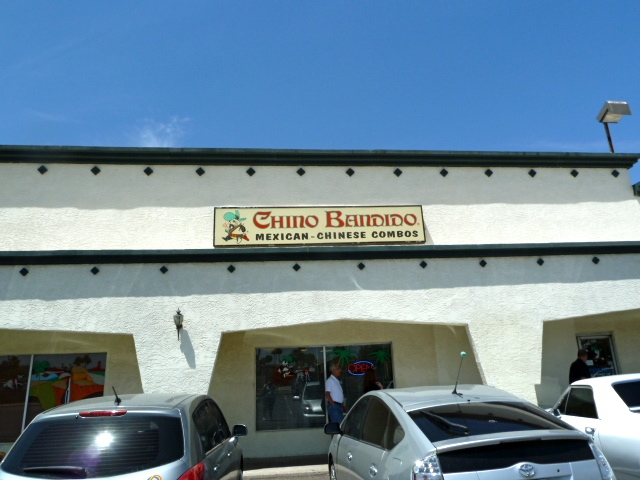
There is nothing like a morning of car racing to make you hungry so we headed over to one of Guy Fieri's "Diners, Drive-Ins and Dives"- Chino Bandido (#68) - in north Phoenix for lunch. Chino Bandido is, quite simply, a culture explosion in a plate.

chino bandido
Located in a strip mall, it is not a place I would probably give a second glance (definitely a dive!) proving that looks can be deceiving!

Chino Bandido, the brain-child of Frank and Eve Collins, opened in 1990. They blend Asian and Mexican cooking styles and flavors to create delicious food that is as much a cerebral experience as it is a taste treat for your mouth! And to encourage customers to try new things, they give ample samples of most of their menu. 

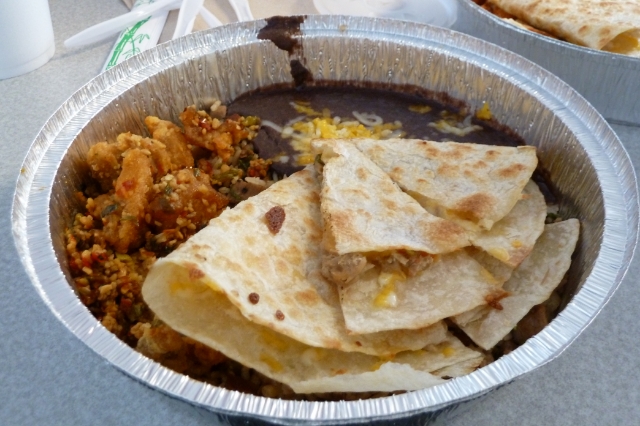
lunch!
I had pollo diablo with jerk-fried rice, a carnitas quesadilla and Cuban black beans- muy bueno!!

With full tummies, it was time for our afternoon adventure... the Mystery Castle (#45). I have lived in the Valley of the Sun almost my entire life and had never heard of the Mystery Castle until just a few years ago. It is, apparently, Phoenix's best-kept secret! And who doesn't like secrets?

mystery castle
800 E. Mineral Road in  Phoenix, Az... right at the base of South Mountain

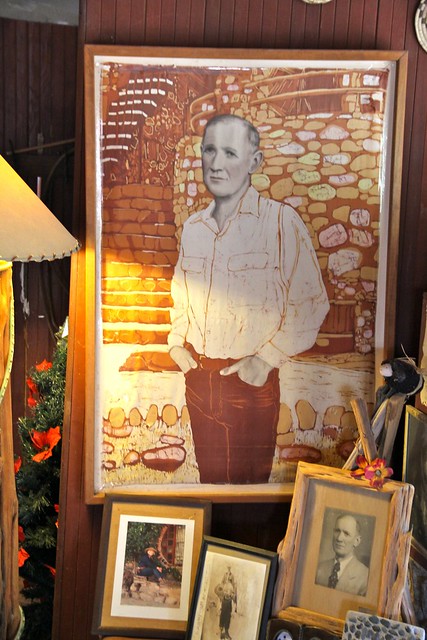
Boyce Luther Gulley lived with his wife and daughter (Mary Lou Gulley) in Seattle in the 1930's. Mary Lou was the apple of his eye and he promised her when she was a toddler that he would build her a castle. After learning he had tuberculosis- which in those days was highly infectious and often fatal, he left his family and moved to Phoenix without telling them. 

portrait of boyce gulley
Portrait of Boyce Gulley

Boyce was an eccentric guy who never stopped loving his family he left behind in Seattle. He dabbled in gold mining and bought some land at the foot of South Mountain that showed some promise. To protect his claim, he began building Mary Lou's castle on top of the mine. As the land was very near what was then the town dump, he probably wasn't in danger of anyone jumping his claim.


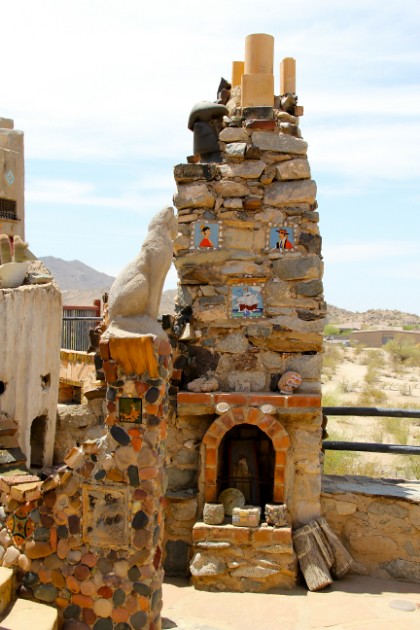
fireplace
Boyce definitely had a thing for fireplaces. He built 13 in his castle including this one on the patio.

Recycling and repurposing is very popular today - not so much in the 1930's - but Boyce seemed to take great pleasure in using old junk he found (things no one else wanted) to build his castle. 

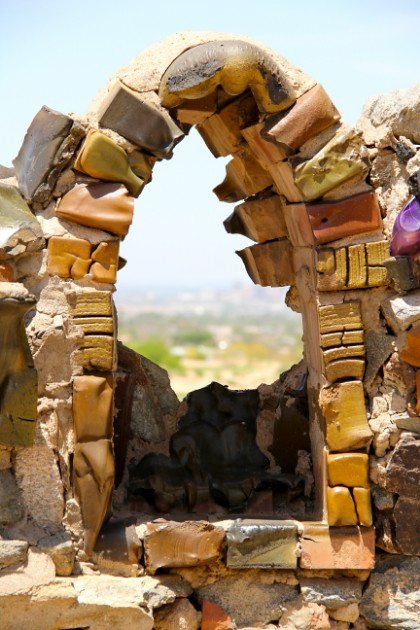
window
These unusual bricks were rejects that got overheated in the furnace melting the tops. One man's trash is another man's treasure!

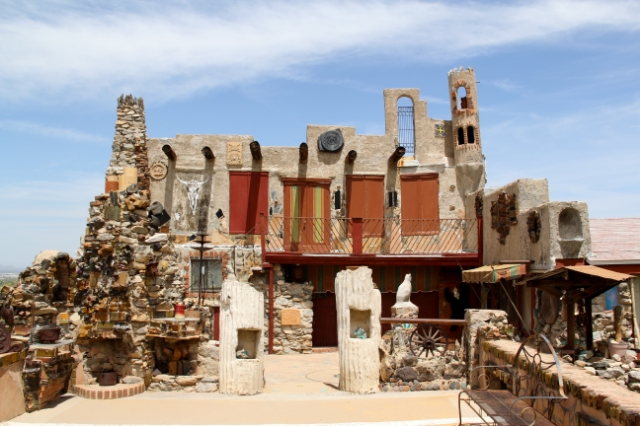
living quarters
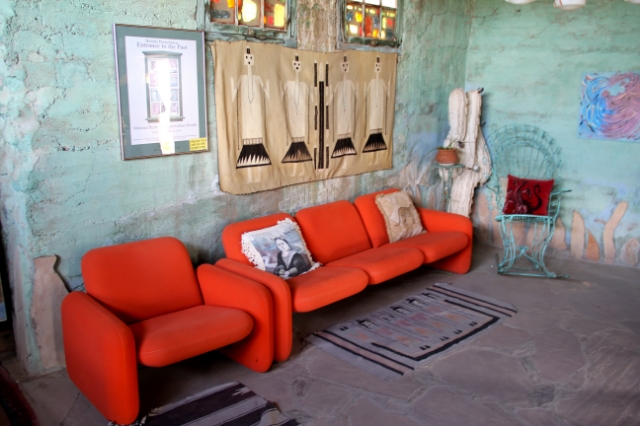
This is the main living area of the castle. Notice all the unusual "finds"- the wagon wheel as part of the fence, the mining buckets, piece of wrought iron fencing in the arched "window" on the roof.

IMG_2783
When this room was being built, the saguaro was very much alive and Boyce did not want to cut it down so he built the room around it. Unfortunately, the giant saguaro was struck by lightning a few years later and died- but still remains in the room. The floors of much of the castle are dirt.


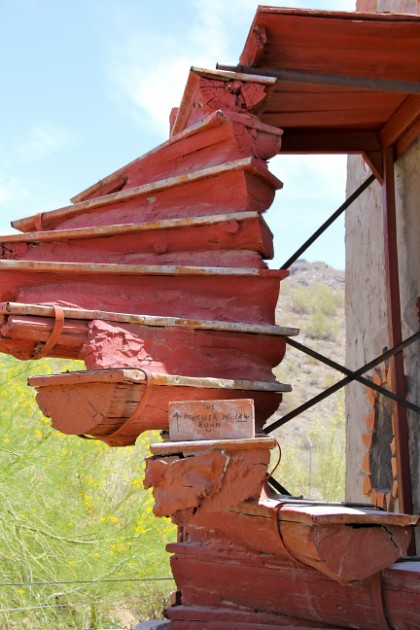
staircase
This part of the castle housed the guest rooms. This stairway leads up to the roof... aka the mother-in-law room.

Even though Boyce bought land very near the city dump (neither expensive nor desirable) and scoured the desert as far as Mexico for "finds" to use in building his castle, he hobnobbed with the rich and famous of the day. Georgia O'Keefe, Frank Lloyd Wright, John Wayne and Barry Goldwater were often guests at his castle.

modern room
Frank Lloyd Wright gave Boyce some of his original furniture for his castle.

Boyce only expected to live about 6 months when he left Seattle. He began building his castle for his daughter so she would have something he built, a piece of him. When he died fifteen years later, the castle was was it appears today. His lawyer sent Mary Lou and her mother a letter that Boyce had written explaining what had happened to him and giving the castle to Mary Lou. The one stipulation was that she had to live in the castle for at least a year.


lion rock
Boyce named this formation on South Mountain Lion Rock... he was particularly fond of cats.

Mary Lou and her mother moved to Phoenix in the mid 1940's and lived in the castle her father had built for her. They had no running water, no electricity (although both were added in 1992), many rooms have dirt floors and "nature" on the inside. At the end of the year, as specified in the letter she received from her father, they opened the door to the mine.

mine door
The door to the mine is guarded by this heavy alligator.

Inside the mine, Mary Lou found the deed to the house, some gold nuggets and another letter from her father. She and her mother decided to continue living in the castle her father built. Her mother passed away in 1970 and Mary Lou in November, 2010; both were still living in the castle at the times of their deaths. Mary Lou formed the Mystery Castle Historical Foundation before her death to ensure the Mystery Castle would be maintained for future generations to see.

Without leaving the metro area, we tried a couple of new things and saw something new. None of them have anything in common other than being part of our adventure that day... and a lot of fun!

Thumb Up or Down: Absolutely UP for all three!!
Miles Round Trip: 114.4 miles
Miles To Date: 4934.8 miles
Percent of List Completed: 54%
Date of This Trip: May 5, 2012
Thursday, May 24

how does your garden grow?...

Nothing says "Spring" like gardening. We've all seen dozens of magazines in the check-out line at the grocery store proclaiming "Fresh & 'Free' Veggies" or "The Dirty Secret of a Vegetable Garden" and been bitten by the gardening bug.

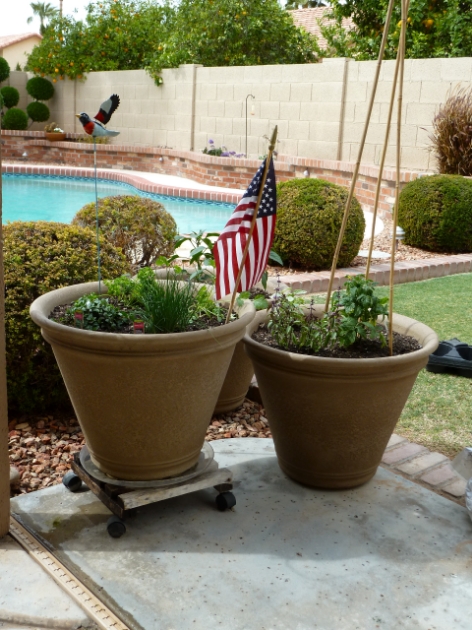
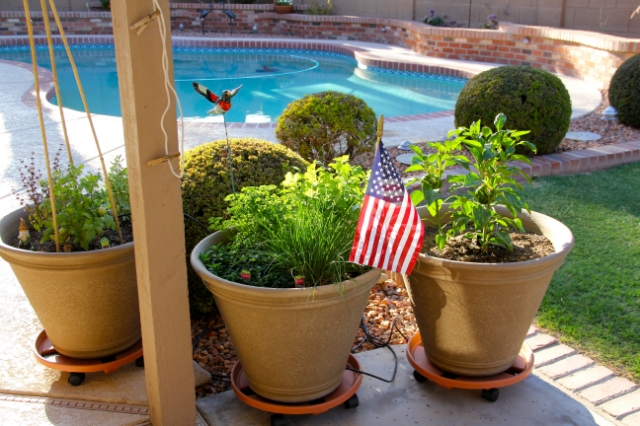
My hubby and I have planted gardens in the past and know the truth: Fresh? Absolutely! Free or cheap? Absolutely NOT! Even so, we decided to plant a "mini-garden" this year with a few favorite herbs in a couple of  large pots and some  tomatoes, peppers and chilies in the back planter.

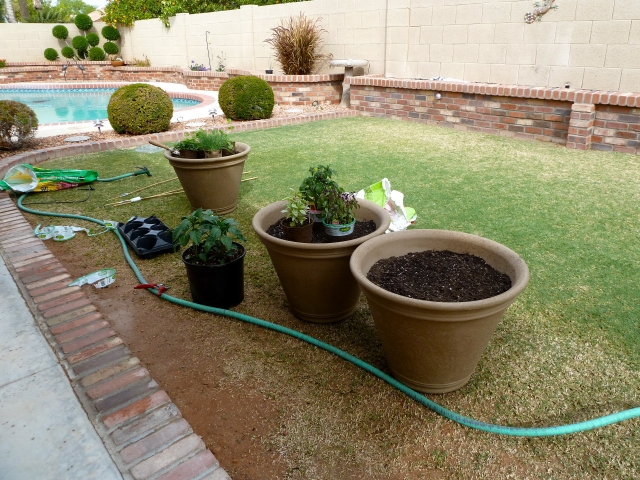
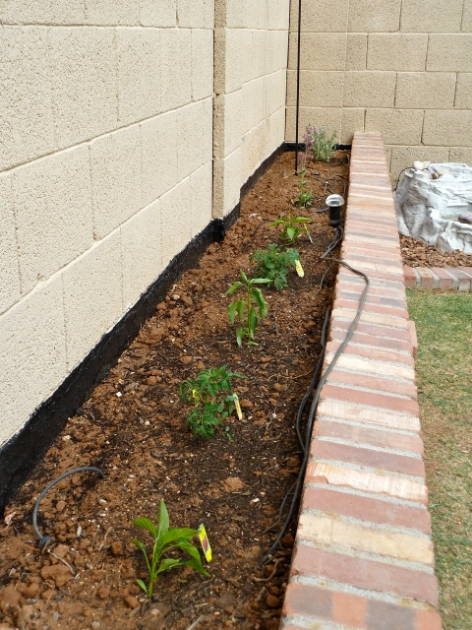
Growing a garden is intentional- it doesn't just sprout up with no effort on our part. First, the soil had to be prepared with mulch and potting soil. Extra drip line had to be installed.

garden prep
As Christians, we need to be intentional in the way we prepare ourselves--- reading God's Word and obediently applying it to our life

Then the tiny plants were carefully planted making sure not to place them too close together.

herb pots

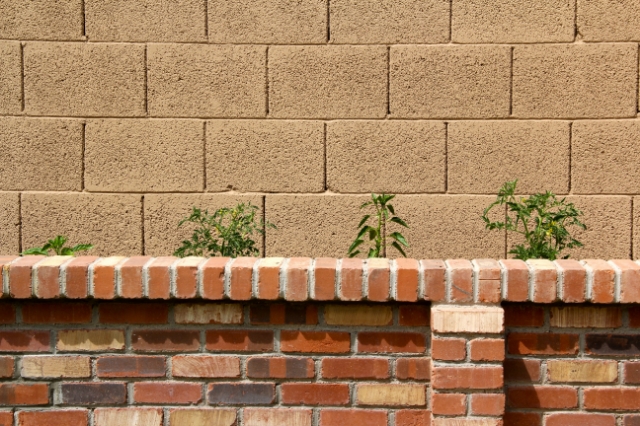
These tomatoes, peppers and chili plants were so small, they barely peeked over the edge of the brick planter. 

new plants

The plants need sunshine and water to grow. Without either one, the garden will die. 

week 1
Likewise, our Christian life requires faith and God's Word to grow. Again, take away either one and our Christian life begins to wither.

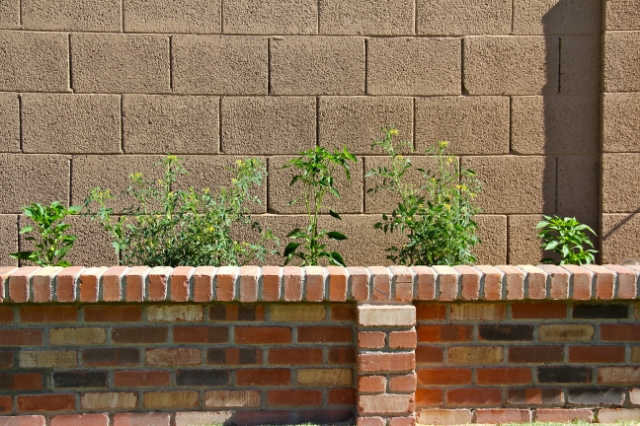
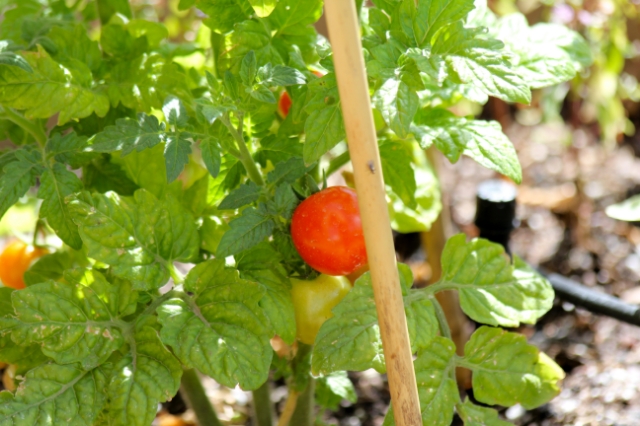
Pretty soon the small plants began to bear fruit. Tiny cherry tomoatoes, jalapenos, bell peppers and green chilis became larger each day.

bigger herbs
The fruit of the Spirit is love, joy, peace, patience, kindness, goodness, faithfulness, gentleness and self-control.
Galatians 5:22
With faithful watering and consistent sunshine, our garden continued to grow. 

week 2

And the fruit grew larger and more ripe.

ripening cherry tomatoes

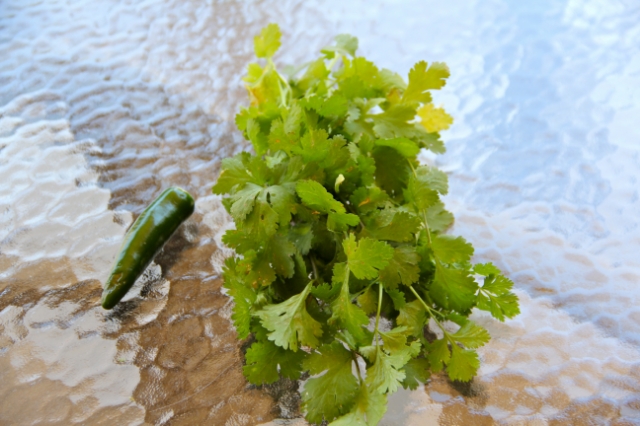
Finally, it was time to harvest some of the fruits of our labor! Homemade salsa with home-grown jalapeno and cilantro was oh-so-fresh tasting!

salsa ingredients


And these ripe-off-the-vine cherry tomatoes brightened our salad!

ripe tomatoes
Just as you can identify a tree by its fruit, so you can identify people by their actions.
Matthew 7:20

So... was it worth the extra effort to plant and maintain a garden? ABSOLUTELY! Not only do we have fresh, delicious, pesticide-free produce but every day as I walk around our garden, I see God's handiwork and rejoice.