I started this blog at the urging of friends and family in April 2010 when my husband and I were given an opportunity to relocate in Maryland for one year. We have now returned home to Arizona and continue to walk by faith as we watch God orchestrate the adventures in our lives. I invite you to share in our adventures as we watch God at work!

We live by faith, not by sight. 2 Corinthians 5:7


Wednesday, June 17

wacky wednesday - my pineapple plant progress

Almost two years ago I planted the top of a pineapple to see if I could grow a pineapple plant in the desert. Okay, it's in my house, not outside in the sweltering dry heat of an Arizona summer. But the point is, I wanted to see if growing a pineapple was possible. You can read that post here.

pineapple plant just planted

Last summer I wrote a post about the progress of my pineapple plant. It had finally, after much coaxing, started to grow.

Pineapple Plant

I was excited thinking it wouldn't be long before a tiny little pineapple started to grow on a stalk shooting up from the center of the plant. At least that's what I was told would happen.

Yeah, that didn't happen.

What did happen was my pineapple plant took off and is growing like a weed!

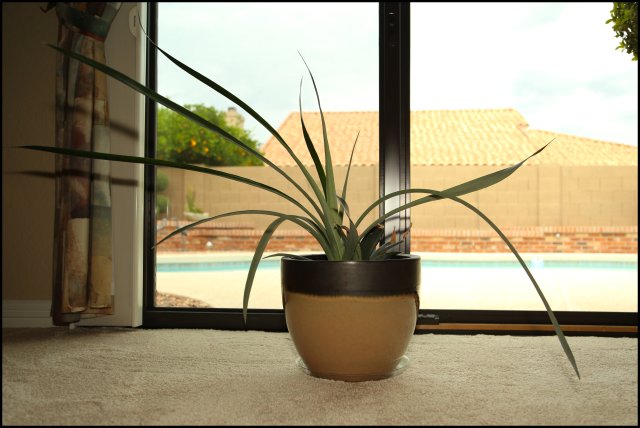
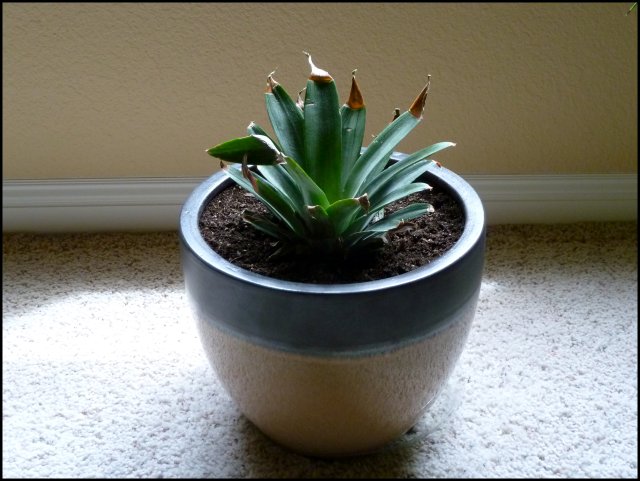
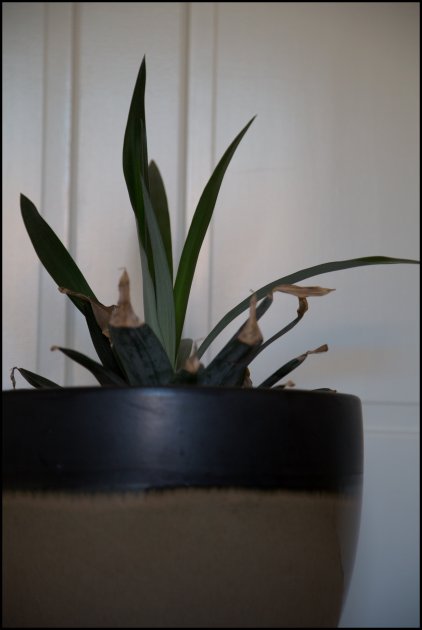
pineapple plant 2015

Although it still has some of the original crown leaves, my pineapple plant has sprouted quite a few new leaves. It's "leaf-span" is about 48-inches by 36-inches by 24-inches high.

In the fields in Hawaii, pineapple plants grow to six feet by six feet before producing fruit but as a "houseplant" they generally produce fruit (often smaller) when they reach a height of 24 to 28 inches. Winter is their fruit-bearing season and according to the internet, there are several methods to "force" them to produce fruit.

Maybe next summer we'll have a home-grown pineapple.

Really.

Wednesday, June 10

wacky wednesday - the right tool for the job

June has arrived. School is out. Outdoor temperatures are rising. People start heading to the beach, to amusement parks, to national parks, to cruise destinations or to the middle of nowhere for a family reunion. Yep, it's vacation time!

And I want to let you in on a little secret I have known for quite some time... your phone is NOT the only camera you need to take on vacation. Oh, the smartphone industry would like you to believe otherwise and spends lots of advertising dollars to promote the camera-aspect of their smartphones, often over their phone functionality, but how many times have you seen photos on Facebook or Instagram of a grainy dinner-in-a-low-light-restaurant pic or an other-worldly-looking flash portrait? Or blurry toddlers (especially their hands) making the great escape? And the list goes on and on.

Geoffrey Fowler, a personal technology columnist for The Wall Street Journal, conducted a test on a recent family vacation in Paris. He took every photograph TWICE, once with his smartphone (iPhone 6 Plus) and once with a mirrorless digital camera (Samsung NX1). I think his family deserves an award for going along with this test. When he and his family looked through their vacation photos, the overwhelming majority of the ones they wanted to print or post were from the "real" camera, not the smartphone.

I commend Fowler for analyzing his photos not just for which ones he liked best but also asking himself why he liked them better. This is a step most hobby photographers skip because it takes time - sometimes a lot of time - and can also be painful when you realize what you captured was not what you wanted to. But in doing so, he determined he (and I would venture to guess, most people) liked the photos that told a story - ones zoomed in to the action or that capture the drama in low-light situations. He preferred the subjects to be sharp and crisp but the backgrounds soft so his eye knew right where to go for the story.

For his test, Fowler used higher end equipment, both smartphone and digital camera.  I have a small point-and shoot camera (about $200) that consistently outperforms the camera on my iPhone 5S. It fits in a pocket or slips in my purse. The only downside is that I cannot instantly upload photos to FaceBook or Instagram but that's a small price to pay for not just good photos but great ones.

My camera of choice when weight and size are not an issue is my dSLR. My iPhone is fine for those impromptu photo ops but when I know I will want photos of something or someone and don't want to lug a big camera around, I take my point-and-shoot. I think it's a great compromise and have never regretted having it with me.

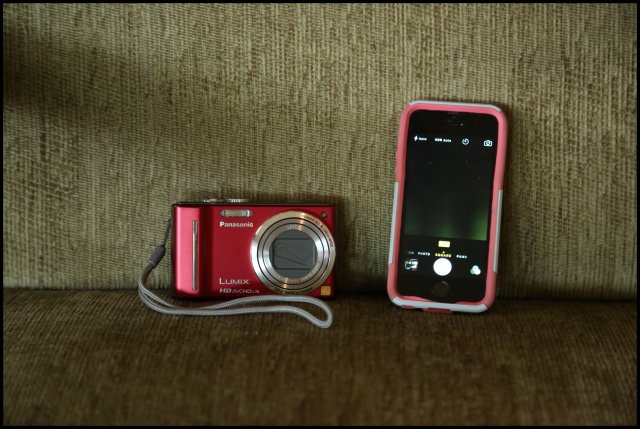
camera VS phone
My point-and-shoot camera is smaller in length and width and only ¾" "fatter" than my iPhone. 

Certainly the smartphone is fast, convenient and very portable but often what's easy isn't what's best.


Wednesday, June 3

wacky wednesday - a new language

.  .

Can you read these two sentences? I looked at the funny little icons for a good ten minutes trying to decipher them. And I must admit, I wasn't even close to the meaning.

Emoji... the new language of social media. 

It started innocently enough with just a few "smiley faces" or emoticons which were actually helpful in showing tone in written text messages. Were you being snarky  or "over the moon"  when you texted "Love you!" to your best friend? 

Emoji, which in Japanese means "picture character," are little pictures that represent words or emotions. Soon, emojis for everyday objects, people, animals, you name it began showing up. There are now nearly 900 emojis with new ones being added almost daily.

Some of my friends string lots of emoji together to create a thought or mood. Unfortunately, most of the meaning is lost on me. But I do enjoy looking at the cute pictures. Many of my friends, and me, use them sparingly in short messages to add flavor, color or emotion. But whether you use them or not, love them or hate them, all indications are that emoji is here to stay. 

So, did you figure out the sentence at the top? It says, "I pride myself on being good at expressing myself in words and even photography. But I'm ashamed of how bad I am at writing in emoji."

Wednesday, May 27

wacky wednesday - monday holidays

This past Monday, May 25th, we celebrated Memorial Day. For many people, it is the unofficial start of summer.  It's a time of pool parties and bbq's and enjoying family and friends. It's a long weekend - a time for people to get out of town for a few days. For my mother's generation, it marked the day when it was okay to wear white, particularly shoes and purses, again - "Only wear white between Memorial Day and Labor Day!"

But, really, Memorial Day isn't about any of those things. It's a day for remembering the veterans who died fighting for our freedoms. Not ALL veterans - that would be Veteran's Day on November 11th - but those who died fighting on our behalf.

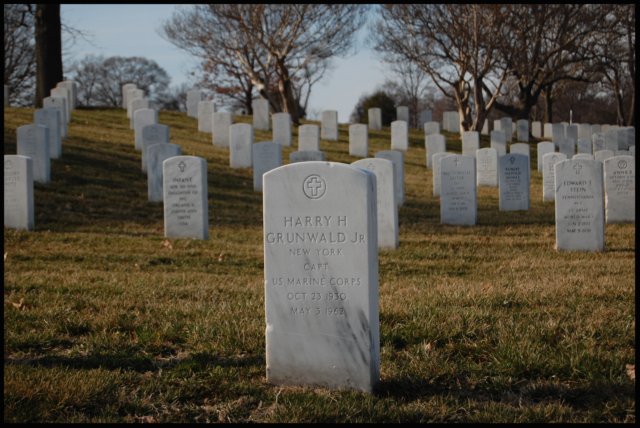
Tomb of the Unknowns #2

Memorial Day, or Decoration Day as it was originally called, was first celebrated on May 30, 1868 when General John A. Morgan (a leader in an organization for Northern Civil War veterans) called for a nationwide day of remembrance on May 30th. He chose that day because it was not the anniversary of any battle in the Civil War. Most southern states did not acknowledge the holiday, choosing instead to honor their dead on different days.

During WWI the United States became entangled in another major conflict, this time global, and the holiday evolved into a commemoration remembering all military personnel who died in all wars. It was celebrated on May 30th, the date selected by Gen. Morgan, for decades.

Headstones

Then, in 1968 Congress passed the Uniform Monday Holiday Act, which went into effect in 1971, making Memorial Day the fourth Monday in May. Three other holidays were also affected by this Act - Washington's Birthday (moved from February 22nd to the third Monday of February), Labor Day (originally celebrated on September 5th but unofficially changed to the first Monday of September in 1884) and Veteran's Day (moved from November 11th to the fourth Monday in October). Columbus Day was created as a holiday, the second Monday in October. All were designated as federal holidays.

Why were the dates of the holidays changed? For the sole reason of giving federal employees a three-day weekend. Congress felt that by observing these holidays on Mondays, there would be "substantial benefits to both the spiritual and economic life of the Nation." They argued it would "afford increased opportunities for families to be together" and it would "enable Americans to enjoy a wider range of recreational opportunities, since they would be afforded more time for travel."  Seriously. Using that reasoning, why not make Thanksgiving the fourth Friday in November? 

Interestingly, Veteran's Day (originally called Armistice Day in 1918 to recognize WWI veterans but changed to Veteran's Day in 1954 to recognize all American veterans) was changed back to November 11th by Congress in 1975 after it became apparent that veterans' organizations opposed the change and 46 states either didn't change the original observation date or returned it to November 11th. 

Personally, I think the meanings of the holidays was diluted when they were changed to "three-day weekends." Pretty soon we will begin calling Memorial Day "May Long Weekend" like Canadians do - only in Canada "May Long Weekend" is Victoria Day, a holiday to honor Queen Victoria's birthday. Many Canadians don't know their Monday or Friday holidays and simply call them " Long Weekend." The holiday has devolved into just another day off. 

But it doesn't have to be. Be a rebel! Fly your flag on May 30th. Visit a national cemetery - it probably won't be crowded. Pray for the military families who have lost loved ones in war. After all, we can't honor our fallen soldiers too much.

Wednesday, May 20

wacky wednesday - the pesky matter of réspondez s'il vous plait

It is that time of year again. No, this is not another post about the weather seasons... although it is warming up. This is about graduation and wedding season. And with those acts of celebration comes ceremonies and parties... and the dreaded "RSVP."

RSVP is an abbreviation for the French phrase, "réspondez s'il vous plait" which means "respond, please." The word "respond" is a verb, an action word, meaning the receiver of the invitation needs to DO something. Responding or replying to the invitation is not just a suggestion, it is a command.

For many generations, it was understood that an invitation - ANY invitation - required a response in a timely fashion. Not replying would be an affront to the host or hostess. It would certainly be the last time you would be invited to a social function.

Eventually, people got a little lax about replying and the abbreviation "RSVP" was added to the bottom of invitations, often with a date that one should reply before, as a gentle reminder that a response was expected.

I remember my mom taking RSVP's very seriously, usually responding within a  day or two of receiving an invitation. With her example and insistence - okay, nagging - I learned to do the same. And I passed that etiquette on to my daughters who, to my knowledge, continue to respond promptly to invitations.

But lately I have heard many party-givers lament not knowing how many people were showing up to their shindig. This makes planning an event a nightmare of giant proportions. It impacts seating, food and drinks for the casual party at home to all of that plus parking, wait staff and favors for a larger celebration like a wedding reception.

Apparently I am not the only one to notice this upswing in bad manners. An article in The Wall Street Journal several months back also addressed it. According to Lizzie Post, the great-great-granddaughter of etiquette expert, Emily Post, and a spokeswoman for the Emily Post Institute, Inc., instant communication is to blame.

I think Ms. Post may be on to something. Back in the day, a written invitation would be hand delivered by a courier who often would wait for the reply and take it back with him. In more modern times, invitations were mailed with or without response cards to be returned via mail. The invitation was "in front of you" (on the refrigerator, kitchen counter, etc.) reminding you to reply.

But now, with many invitations being texted or emailed, we read them and forget about them when the next text or email pops up. Or we intentionally wait to see if something more interesting comes along. We have forgotten how to simply commit. We no longer have to allow three to five days for the US Postal Service to deliver our response. It can now be delivered almost instantly anywhere in the world to someone's "inbox" and read by them on their phone.

While all these "reasons" are true, I don't believe they should be excuses. It was, is and always will be bad manners to ignore invitations by not responding with a yes or no answer. And good manners are always in style.
Wednesday, May 13

wacky wednesday - perspective

For a little over a year, I have been participating in a photo 365 project called Capture Your 365. The idea is to take a photograph every single day. One reason to do that is to learn to take better photos. Another is to learn to use your camera. But I think the best reason is to notice and document your everyday life. (But all of this is a blog post for another day!)

The daily prompt on Monday was "Bottoms Up - Base, Foot, Underside." I contemplated what I would shoot as I washed dishes. I like photographing flowers and the agapanthus in my backyard was starting to bloom. Hmmm.

Agapanthus flowers are simply gorgeous once they've opened. And I have many photos of them over the course of the years. But I don't have any shot from the bottom side.

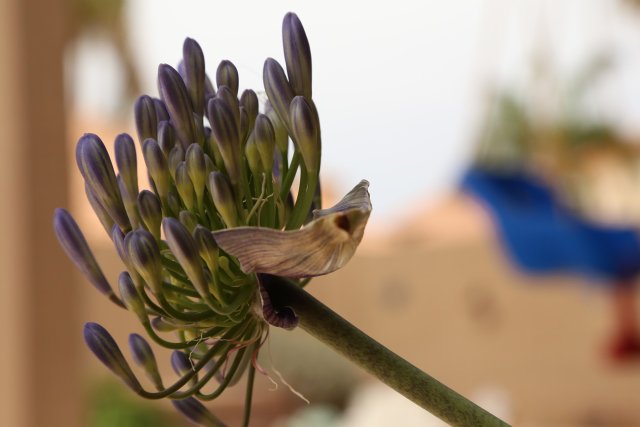
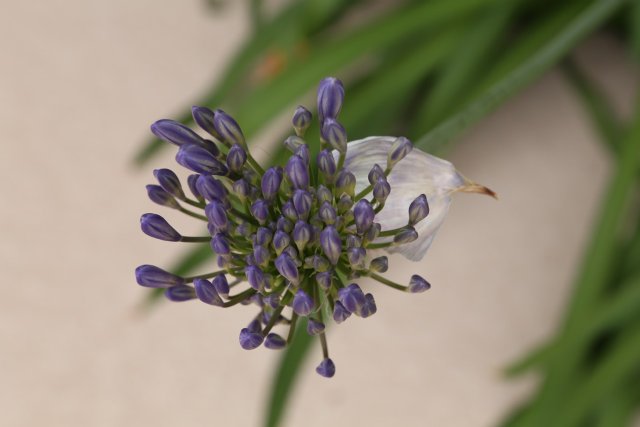
It takes several days for them to completely open and "fluff out." Mine are in the beginning stage where they have just broken free from the "pod" but the papery thin "pod" is still attached. This "Underside" would be my photo of the day (POTD).

Laying on the kool-deck looking up at the underside of the agapanthus bloom gave me an interesting perspective. I could see the purplish striations in the papery thin "pod" that aren't visible when you view it from the top. I also noticed how each individual "petal" (or is it a "flower?" I am NOT a botanist or a gardner!) bends upward. Again, this is not something that is apparent from a top view.


flower perspective #2

Standing up, I shot a top view looking straight down. Hmmm. It looks similar, but different. The "petals" are more clustered showing more purple and less green. And the "pod" looks like a piece of onion skin.

flower perspective #1

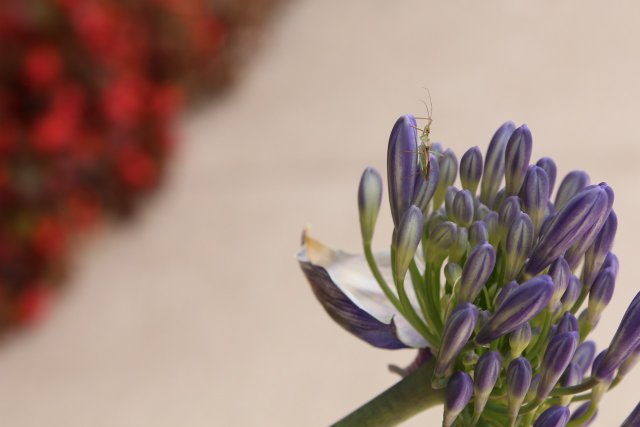
Finally, I sat on the kool-deck and shot from the side. What a different perspective! I could see both the purplish striated underside of the "pod" as well as the white on the top-side. And the "petals" look much longer. And there is a baby grasshopper on one of them!

flower perspective #3

As I was shooting my agapanthus from different positions, I thought about how perspective applies to more than just photography. If my agapanthus flower were an idea or opinion, carefully looking at it from different angles and sides would give me a new perspective. It would allow me to think more critically and objectively, to really understand someone else's point of view.

Something to ponder.

Wednesday, May 6

wacky wednesday - cluck, cluck

My aunt and uncle had a farm in Montana when I was growing up and I loved spending time there during the summer. One of my jobs (actually, I think it was my ONLY job) was to gather the chicken eggs every morning. They often found their way into my breakfast and let me tell you, there is absolutely nothing like farm fresh eggs with lemony-yellow yolks!

But, as an adult, I live in the big city and almost always get my eggs at the grocery store (not nearly as tasty!). Recently, several of my friends decided to be urban chicken farmers so they would have fresh eggs and they occasionally share with me. Yep, even city-dwellers can have chickens in their yards. The town ordinance where I live allows up to five chickens on ⅛-acre lots with larger lots allowing more chickens (up to about 50 on a one-acre property).

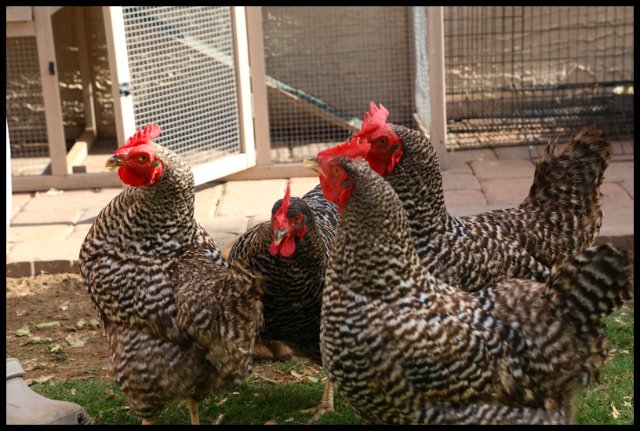
cluck 1

My friends all claim that their chickens (or "girls" as they call them) make a variety of sounds (clucks, trills, coos,...) and that they can tell when the "girls" are upset or making happy sounds. Mostly I smile and nod as I listen.

But this week I read an article (The Wall Street Journal, May 4, 2015) that affirms their claims and takes it a step further. Researchers and engineers at Georgia Institute of Technology are working to digitally detect the sounds unhappy chickens make. Why, you ask? 

Georgia is the nation's largest producer of chickens. Knowing when chickens are getting sick, are too hot or cold, or just get their feathers ruffled about something affects poultry farmers' bottom line as unhealthy or discontent chickens don't fatten up as quickly or lay as many eggs. 

Georgia Tech students developed a recording app for smartphones called SCAR (Sick Chicken Audio Recorder - yeah, I have no words...) that they used to collect over 1,000 hours of chickens clucking while content, sick, crowded and cold. Then researchers and engineers did their geeky thing ending up with digitized clucks using a method similar to the way a smartphone analyzes human voices asking what Siri is wearing.

The poultry industry is excited to put this technology into practice. They claim it will be a faster, cheaper and more accurate way to monitor flocks than the current method of having humans walk through hen houses (which can hold 50,000 chickens) listening for disgruntled chickens. 

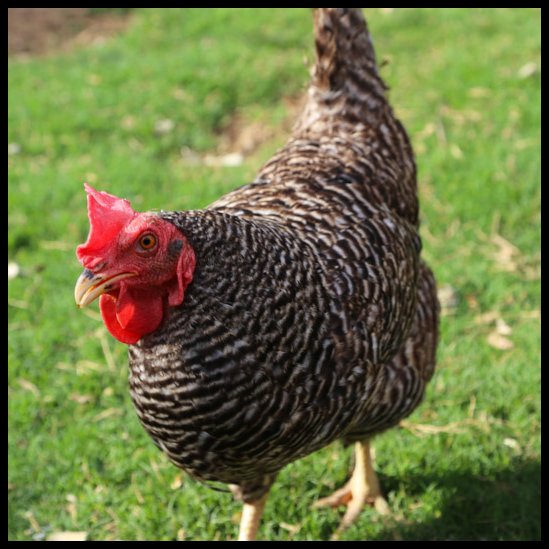
cluck 2

Hmmmm. I guess I'm the one with egg on my face.